If you’re going to let an AI write to your patients in your practice’s name, the question that should keep you up isn’t whether it can write a nice message. It’s whether it writes a good one every time, at scale, without anyone reading each one first. “Trustworthy AI” is a phrase every vendor now prints on a slide. Trustworthy AI patient messaging is something you can only believe if the company can show you the machinery that backs the claim — and most can’t, because they don’t have any. Here’s ours.
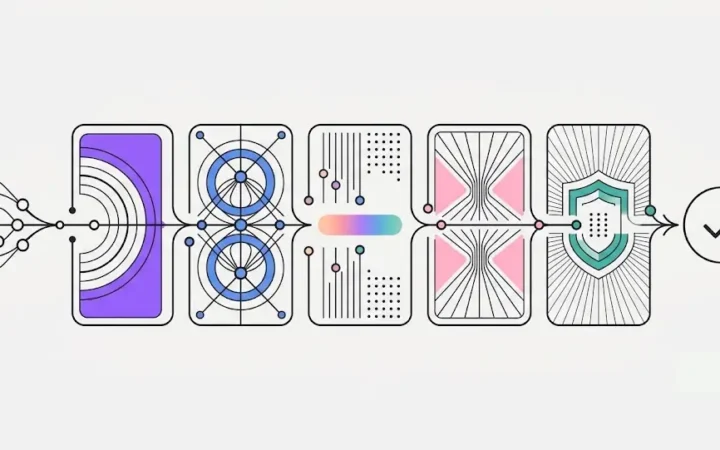
The thing that makes an AI risky in a practice isn’t that it might be wrong. It’s that it can be wrong while sounding completely right — a fluent, confident message that’s subtly off-brand, poorly timed, or inappropriate for that patient, going out under your name before anyone notices. Fluency is the trap. So the safeguards have to assume the AI can sound good and still be wrong, and catch it anyway. ELVA’s do, in three layers.
The three layers that stand between the AI and your patient
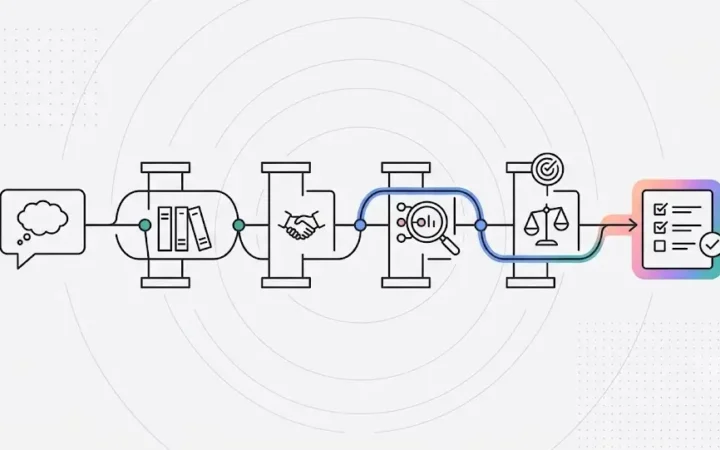
- Every message is reviewed before it sends. Each communication passes through a built-in quality-and-safety review before it reaches a patient. If a message doesn’t clear the bar, it doesn’t go out. When the system isn’t sure, it holds rather than ships — no off-brand, awkward, or inappropriate message goes out in the practice’s name because “the AI thought it was fine.”
- The AI doesn’t get the only vote. This is the part most companies skip: we don’t let the AI be the sole judge of its own work. ELVA runs a separate, rigorous program to measure whether what the Brain produces is actually correct, on-message, and trustworthy — independent checks plus human oversight — and holds quality to that standard over time, not just on launch day.
- Restraint is built in. The Brain knows when not to speak. It won’t reach out on a channel a patient asked it to avoid, it’s aware of message fatigue so it won’t overwhelm, and it keeps sensitive matters (a billing conversation) apart from light ones (a birthday note). Knowing when to stay quiet is part of being trustworthy.
Underneath all three is a privacy posture that’s foundational rather than bolted on: personalization only happens when a patient has agreed to it, sensitive information stays walled off unless it’s explicitly cleared, and when there’s any doubt, the Brain deliberately does less, not more. The practice earns the right to be personal before it acts on it.
Why “we test it independently” is the load-bearing claim
Plenty of tools will tell you their AI is accurate. Almost none will tell you how they know — because the honest answer is usually “we don’t, beyond hoping.” The difference that matters is whether a company has built the machinery to verify quality independently of the AI’s own confidence. ELVA holds its AI to a standard measured by something other than the AI itself, with human oversight in the loop.
This is the same conviction behind RingScore, the open-source AI Receptionist Evaluation Platform — that AI claims in dentistry should be independently evaluated, not taken on faith. An evaluation platform you can inspect is the antidote to “trust the magic,” and it’s how you’d answer the question every operator should ask — is my AI quietly making mistakes? The same principle governs how the Brain’s messaging is held to account: independent measurement beats self-assessment, every time.
Why this clears the bar a serious buyer sets
A solo owner can try a tool because they like it. A group practice or DSO can’t — it answers to stakeholders, often a board or a compliance function, and “the vendor says it’s accurate” is not an answer those stakeholders accept. The properties above are exactly what makes an AI deployment defensible to them: messages reviewed before they send, quality measured independently with human oversight, consent and boundaries respected by default, and restraint engineered in. That’s the same posture that makes any AI defensible to a board, and the same reason a practice is right to be skeptical of AI and right to demand the machinery before trusting it. It’s also what separates a system built to be trustworthy from one with trust asserted on its behalf — the line between AI by design and “AI-powered.”
Every message ELVA Recall sends — and every individually-written message the Brain composes — passes through these safeguards before a patient sees it. Personal at scale is only worth having if it’s trustworthy at scale; the two were built together. See the system on the ELVA Brain page.
Frequently Asked Questions
How do you know an AI’s patient messages are trustworthy?
Not by trusting the AI’s own confidence. Trustworthy AI patient messaging requires machinery: every message reviewed against a quality-and-safety bar before it sends, plus an independent program that measures whether the AI’s output is actually correct and on-message — with human oversight — held to that standard over time, not just at launch.
What happens if the AI isn’t sure about a message?
It holds rather than sends. The guiding principle is that no message is better than a bad message going out in the practice’s name — so when a message doesn’t clear the quality-and-safety review, or the system isn’t confident, it doesn’t ship.
Does ELVA let its own AI judge its own quality?
No — that’s the point. ELVA runs a separate program with independent checks and human oversight to measure message quality, rather than letting the AI be the sole judge of its own work. Independent measurement is the load-bearing claim; self-assessment isn’t enough.
How does ELVA protect patient privacy in personalized messages?
Privacy is foundational, not bolted on: personalization happens only when a patient has agreed to it, sensitive information stays walled off unless explicitly cleared, and when in doubt the system does less rather than more. The practice earns the right to be personal before acting on it.
Is this enough to satisfy a board or compliance review?
It’s built for exactly that scrutiny: messages reviewed before sending, quality measured independently with human oversight, consent and channel boundaries respected by default, and restraint engineered in. Those are the properties a risk function looks for, which is what makes the deployment defensible rather than a leap of faith.
Trust, built in — and measured. See the ELVA Brain, or how ELVA puts every recall message through these safeguards in ELVA Recall.