Every practice management add-on in the category will send a patient a reminder. Type a few days into a settings screen, merge in a first name, and a text goes out before the appointment. It’s useful, and it’s also where most tools stop. The gap between a tool that sends reminders and a dental patient recall system that fills chairs is the difference between activity and outcomes — and it’s a gap most practices are paying for without seeing.
The reminder utilities — and most of the well-known names are, underneath, reminder utilities — converge on the same shape: timer-based sends filtered by appointment type, a short menu of five to ten campaign templates, list-based targeting (“overdue hygiene,” “no email on file”), basic reply detection, and a report that counts messages sent, delivered, and opened. None of that is wrong. It’s just a kitchen timer when what the schedule needs is a teammate.
What a recall engine does that a reminder tool doesn’t
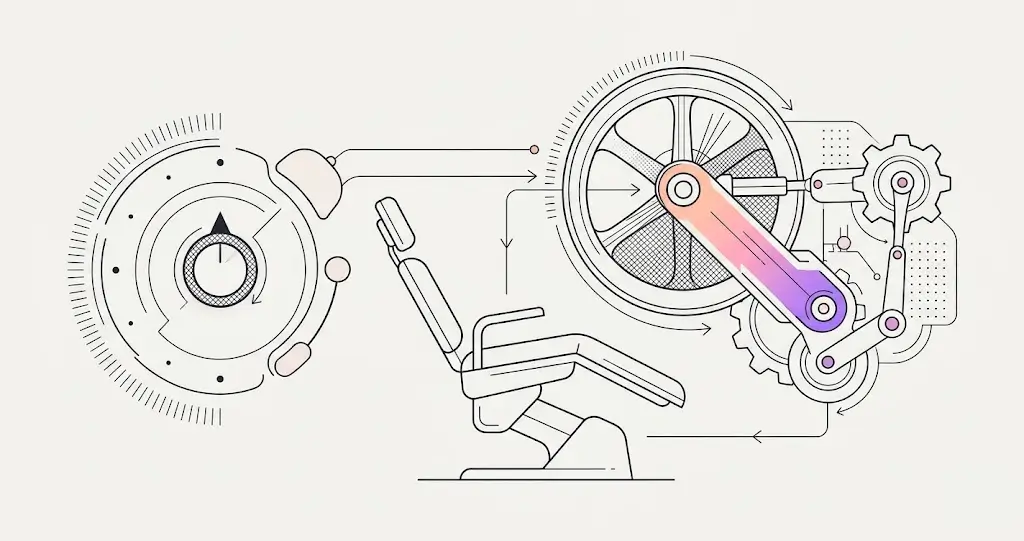
A recall engine runs the whole patient-return motion, not just the nudge at the end of it. Four capabilities mark the line, and each is a full piece in this series:
- A real program library, not a template gallery. Most tools ship five to ten campaign templates. ELVA ships 28 clinically and operationally grounded recall programs — preventive, schedule protection, revenue recovery, loyalty, and the clinical-safety and specialty programs no one else pre-builds. The 28 programs, and why depth matters.
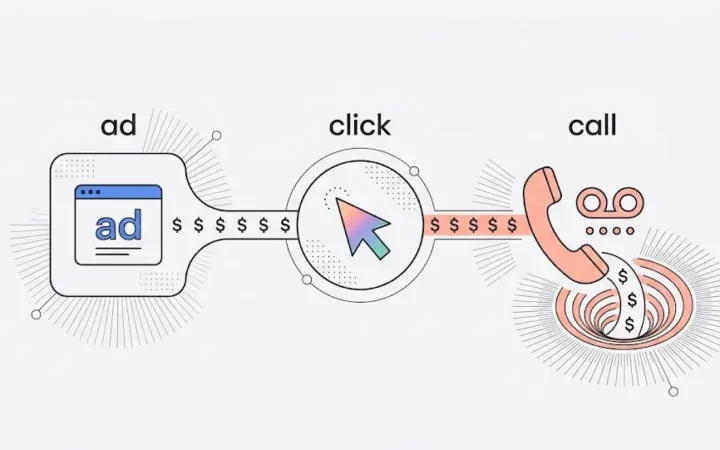
- Outcomes, not vanity metrics. Where the category reports “messages sent” and “open rate,” a recall engine reports production recovered, chairs filled, lifetime value reactivated, and staff hours saved. Why your recall report should count dollars, not texts.
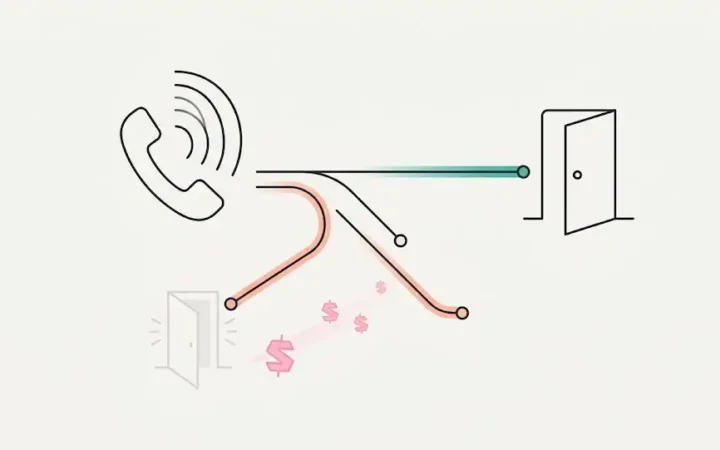
- Audiences you describe in plain English. Targeting in the rest of the category means picking an appointment type or pulling an “overdue” list. A recall engine lets you describe the exact patient situation in a sentence and assembles the segment from composable clinical, financial, and behavioral filters. Target like a database, describe it like a sentence.
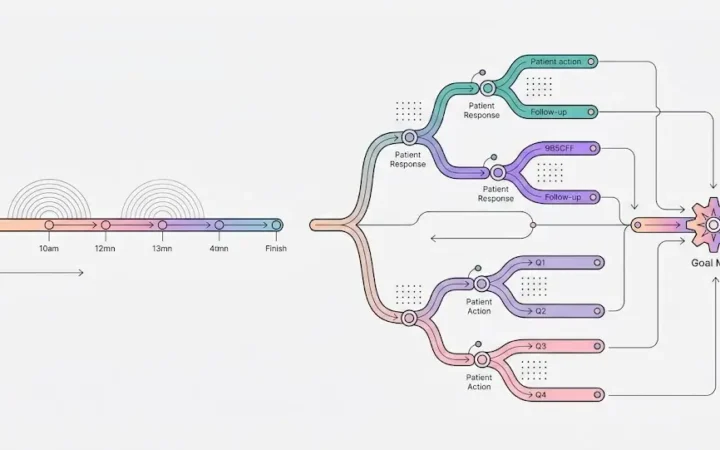
- Sequences that adapt, not timers that fire. Reminders are linear: send, maybe send again, done. A recall engine runs branching, multi-channel sequences — text, email, AI voice, and a human-call handoff — that respond to what the patient actually does and stop when the goal is met. Automation that escalates like your best office manager.
Why this is an engine and not a feature
The reason these four add up to something categorically different is what sits underneath them. Every message a recall sequence sends — across all four channels, for all 28 programs — is composed individually by the ELVA Brain and quality-checked before it sends. So escalating a lapsed patient across text, email, and a call doesn’t mean four robotic, identical messages; it means four messages written for that person, each fitting its channel. The targeting decides who, the sequence decides when and how, and the Brain decides what the message actually says — that combination is the engine.
One of those 28 programs is worth singling out, because it isn’t really marketing at all: a post-operative follow-up that captures a patient’s pain score and alerts your team when an answer warrants attention. Few tools in the category attempt it, and it’s the clearest signal that a recall engine is built around patient outcomes rather than message volume.
What it means for the schedule
A dental practice’s production is gated by two things a recall engine directly attacks: chairs that go empty and patients who drift away. The American Dental Association’s Health Policy Institute has reported that roughly a third of the dentists it surveyed had openings in their schedules they wanted filled — capacity that already exists, waiting on the patient-return motion to work. Reminders alone don’t close that gap, because the patients who fill those chairs are often the ones a timer-based reminder never reaches: the lapsed patient you need to reactivate, the accepted-but-never-scheduled treatment plan, the benefits about to expire. An engine that targets those situations precisely and works them intelligently is how the gap closes.
If you operate multiple locations, the same engine is what lets you see recall performance the way you see the rest of the group — in current numbers across every location, measured in dollars and chairs rather than message counts assembled by hand.
The four pieces above go deep on each capability. Start wherever your schedule hurts most — and see the whole engine on the ELVA Recall page.
Frequently Asked Questions
What is a dental patient recall system?
It’s the system that brings patients back for the care they’re due and keeps the schedule full — hygiene recall, reactivation of lapsed patients, treatment-plan follow-up, and more. The difference between a basic reminder tool and a true recall system is that a reminder tool sends timed nudges, while a recall system targets the right patients, runs adaptive multi-channel sequences, and measures results in production recovered and chairs filled.
How is a recall engine different from appointment reminders?
Appointment reminders are timer-based and linear: send a text a few days out, maybe an email before it, done. A recall engine runs the whole patient-return motion — a deep library of programs, plain-language patient targeting, branching multi-channel sequences that adapt to patient behavior, and outcome-based reporting. Reminders are one feature of recall, not the whole of it.
Does ELVA Recall replace my reminder system?
It does what a reminder system does and considerably more. Beyond confirmations and reminders, it runs 28 clinically-grounded recall programs, builds audiences from plain-English descriptions, sequences across text, email, AI voice, and human-call handoff, and reports outcomes in dollars and chair-hours rather than messages sent.
What makes ELVA Recall’s messages different across channels?
Every message is composed individually by the ELVA Brain and quality-checked before it sends, and it’s written natively for its channel — a text isn’t a shrunken email, and a voice script isn’t a printed letter. Escalating one patient across several channels produces several messages written for that person, not the same template repeated.
Can ELVA Recall help fill last-minute openings?
Yes. Among the 28 programs is a waitlist-and-cancellation-fill program that sends a same-day opening to the waitlist in real time, plus confirmation and no-show-follow-up programs designed to protect the slots already booked.
See the whole engine. Explore ELVA Recall, or start with the piece on the problem hurting your schedule most — the 28 programs, outcome reporting, plain-language targeting, or adaptive sequences.