When a new front-desk person starts, you don’t get a productive team member on day one. You get someone who needs weeks — often months — just to learn where things live in the practice management system. Which screen, which filter, which report, which field. The dental work they were hired for waits behind a long apprenticeship in software navigation. If you’ve ever wondered why new front-desk hires take so long to become useful, most of that ramp isn’t about dentistry or your patients. It’s about the PMS — and that’s the part you can shorten.
It’s a cost almost no practice measures, because it doesn’t show up as a line item. It shows up as a capable new hire who still has to ask a veteran “how do I pull this?” three months in — which means two people are tied up in one task, and the veteran’s own work waits.
Why the ramp is so long — and so expensive
Practice management systems are powerful and dense. They were built for the person who lives in them all day and has, over years, internalized where everything is. For a new hire, that depth is a wall. They’re not learning a few buttons; they’re learning an entire system’s worth of screens, filters, and conventions that were never designed to be intuitive — they were designed to be comprehensive.
So the ramp has three hidden costs. There’s the new hire’s slow productivity — weeks of being half-useful while they learn the software. There’s the veteran’s drained time — every “where do I find this?” pulls your most experienced person off their own work to answer it. And there’s the fragility: all that hard-won navigation knowledge lives in people, so when an experienced person leaves, the practice loses it and starts the ramp over with whoever replaces them. You’re not paying this tax once. You’re paying it on every hire, and again every time someone leaves.
The ramp is mostly about the software, not the job
Here’s the reframe that matters: most of what makes a new front-desk hire slow isn’t the actual work of running a front desk. It’s the software. A sharp new hire often understands the job quickly — greeting patients, handling the phone, managing the schedule. What takes months is learning to operate the system that the job runs on. Separate those two, and the long ramp turns out to be mostly avoidable.
When the system answers, the ramp collapses
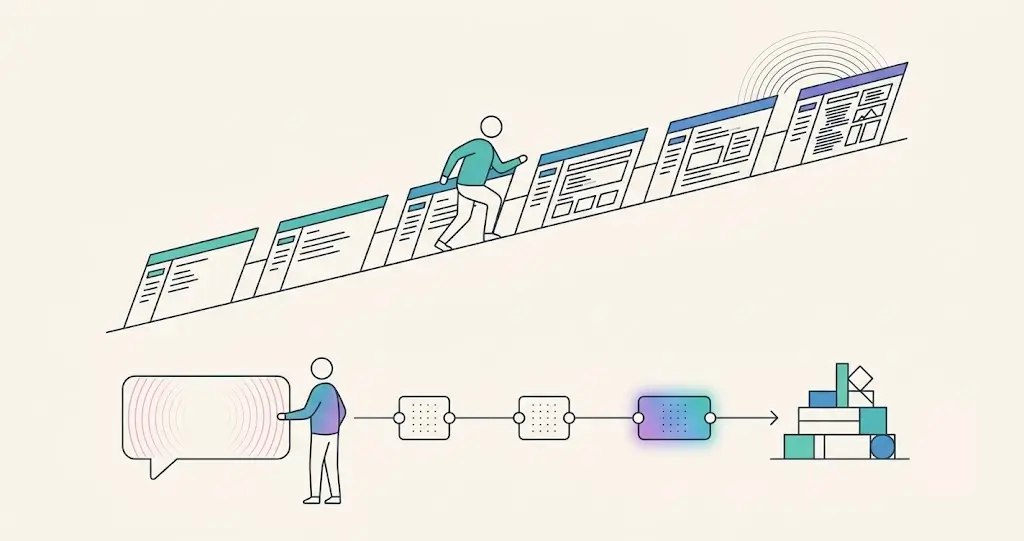
This is what a conversational layer on the PMS changes. When a new hire can simply ask the system — “how do I see what this patient owes?” “show me tomorrow’s unconfirmed appointments” “what’s overdue for recall?” — in plain language, they don’t need to memorize where everything lives first. They get the answer on day one and learn the deeper system gradually, while already being useful.
The three costs invert. The new hire is productive almost immediately, because the thing that used to gate productivity — knowing the software cold — is no longer the prerequisite. The veteran gets their time back, because the new person asks the system instead of asking them. And the fragility goes away: the navigation knowledge that used to live in people’s heads now lives in a system that doesn’t quit — the same reason a practice stops getting different answers to the same question depending on who’s asking.
What this is worth
Think about the real arithmetic. Front-desk turnover is high in dentistry, which means the ramp isn’t a one-time onboarding event — it’s a recurring cost you pay over and over. Every month you shave off “time until a new hire is useful,” multiplied by how often you hire, is real productivity recovered. And the relief is mutual: the new hire isn’t drowning in a system they can’t navigate, and your veterans aren’t spending their week as a help desk.
None of this means the new hire never learns the PMS. It means they don’t have to learn all of it before they can contribute. They become useful first and fluent over time — which is the right order, and the opposite of how front-desk onboarding usually works.
The bottom line
The three-month software ramp isn’t an unavoidable cost of hiring. It’s an artifact of making every new person learn a dense system before they’re allowed to be productive in it. Let them ask the system instead, and the ramp collapses to something far shorter — useful on day one, fluent over time, with your veterans freed from playing help desk. That’s part of what ELVA changes about running the front office.
Frequently Asked Questions
Why do new front-desk hires take so long to become productive?
Because most of the ramp isn’t about the job — it’s about learning to operate a dense practice management system. New hires often grasp the work (phones, scheduling, patients) quickly; what takes weeks or months is memorizing where everything lives in the software. Separating the two shows most of the long ramp is avoidable.
What does the onboarding ramp actually cost a practice?
Three hidden costs: the new hire’s slow productivity while they learn the system, the veteran’s drained time answering “where do I find this?”, and fragility — that navigation knowledge lives in people, so it’s lost and rebuilt every time someone leaves. With high front-desk turnover, it’s a recurring cost, not a one-time one.
How does a conversational layer shorten the ramp?
It lets a new hire ask the system in plain language — “what does this patient owe?”, “show tomorrow’s unconfirmed appointments” — instead of memorizing where everything lives. They get answers on day one and become useful immediately, learning the deeper system gradually rather than as a prerequisite.
Does this mean new hires never learn the PMS?
No. It means they don’t have to learn all of it before they can contribute. They become useful first and fluent over time — the opposite of the usual order, where productivity is gated behind months of software training.
How does this help with front-desk turnover?
Because the navigation knowledge lives in the system rather than only in people, a departure doesn’t reset the practice to zero, and a replacement ramps far faster by asking the system. The recurring onboarding tax that scales with turnover is substantially reduced.
Make new hires useful on day one. See how a conversational layer on your PMS works, or explore ELVA.