Every DSO leader knows the headline number: collections. Far fewer can see the leak underneath it — the revenue that was earned, billed, and then quietly lost to denials, delays, missed underpayments, and the handful of people who happen to know how each payer behaves. Dental revenue leakage is the gap between what your practices earned and what they actually collected — and it rarely shows up as a crisis. It shows up as a net collection rate a few points lower than it should be, across every location, every month.
Here’s where the money goes, and why throwing more billing staff at it has stopped working.
Denials are rising, and each one costs you twice
Industry reporting puts the average dental claim denial rate around 15%, up roughly four points from just a couple of years ago, with first-submission denial rates running closer to 19–20%. And the pressure is broad, not anecdotal: in the Zentist Dental RCM Trends report, 78% of dental offices said denials or payer scrutiny increased over the past twelve months.
The denial itself isn’t the worst part. Industry estimates put the cost of reworking a denied claim at over a hundred dollars in staff time and overhead — research, correction, resubmission, follow-up — and most of that cost is your most experienced people’s hours. A practice running 400 claims a month at a 15% denial rate generates roughly 60 denials a month that someone has to chase. Multiply that across a group’s locations and the rework alone is a full-time function you never chose to staff. Most of it is preventable before submission — which is exactly why prevention, not faster rework, is where the leverage is.
The denials you can’t see are the ones that bleed
The more dangerous failure is the denial nobody is working yet. When remittances pile up unposted, denied claims sit invisible inside that pile — no one has read the EOB, no one has started the appeal, and the payer’s appeal window (typically 30 to 180 days, depending on the carrier) is already burning down. Industry reporting suggests as many as two-thirds of denied claims are never resubmitted at all. The revenue doesn’t get denied so much as it expires.
This is why a “good” denial rate can still hide a bad collection outcome: the problem isn’t only how many claims are denied — it’s how many are silently abandoned because the work didn’t start fast enough. A posting queue that runs a week behind is a week off every appeal clock in it. That latency problem has its own anatomy, and its own fix: in-house, same-day payment posting.
Your revenue depends on a few people’s memory
Ask most practices how they know that a given payer downgrades posterior composites, requires a perio chart for scaling, or enforces a five-year crown frequency — and the answer is a person. A veteran biller carries a mental map of how each carrier really behaves. That knowledge is real and valuable, and it’s also a structural liability:
- It doesn’t scale across locations — each office re-learns the same payers independently.
- It walks out the door when that person leaves, and billing turnover is real — the same knowledge-loss problem that hits every role in a practice, concentrated on your revenue.
- It can’t be audited, version-controlled, or improved systematically — you can’t review a memory.
The common fix — outsourcing to a third-party billing company — trades the dependency for a different one. The expertise now lives outside your walls, your patient data travels to a vendor, and you lose visibility into the decisions being made on your revenue. You’ve removed the staffing headache and replaced it with a black box.
Underpayments: the quietest leak of all
Manual posting also carries a known data-entry error class — misread amounts, wrong adjustment codes, payments applied to the wrong patient — and each small error distorts AR or triggers a patient billing complaint. But the quietest leak is the underpayment: when a payer pays less than the contracted rate and no one catches it, there’s no denial to flag it. The money simply never arrives, and the claim looks “paid.” Across thousands of claims, systematic short-pays are often among the largest unrecovered line items a group has — precisely because nothing surfaces them.
What ELVA actually changes
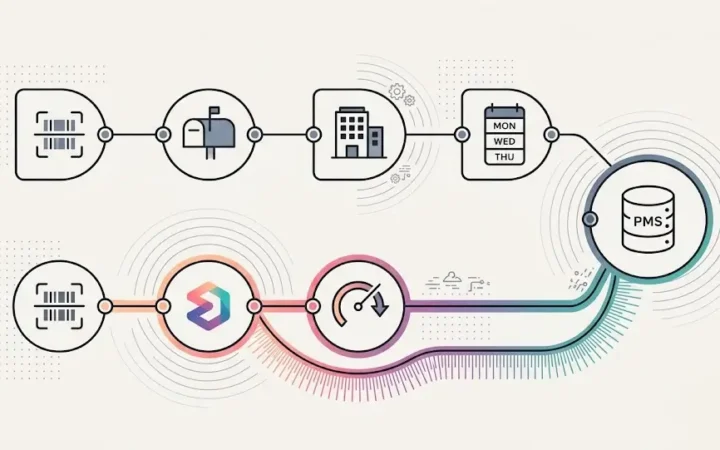
ELVA’s RCM platform is built to remove three things — the latency, the errors, and the single-person dependency — without removing your people from the loop where judgment matters:
- It knows each payer’s real behavior, not just its published policy. ELVA learns how every payer actually adjudicates from your own claims history and corroborates it against the payer’s documented rules — so the knowledge that used to live in one biller’s head becomes a shared, auditable, always-current asset across every location. (The architecture behind that is published, for the technical evaluators on your team.)
- Denials don’t hide. Remittances are read as they arrive, denials surface immediately with the reason and the next step in denials management, and the appeal clock starts on day zero instead of day ten.
- Underpayments get caught. Every payment is compared against the expected contracted amount, short-pays are flagged in accounts receivable instead of vanishing — and ELVA drafts the appeal.
- It’s honest about uncertainty. When the data doesn’t support a confident answer, ELVA says so and routes the item to a person rather than guessing — because a confident wrong answer is what creates the denial in the first place.
The goal isn’t to replace your billing team. It’s to stop your collection rate from quietly depending on who’s at their desk this week, how fast the posting queue moves, and whether anyone happened to notice a payer paid eighty cents on the dollar.
The cost of doing nothing
The leak is easy to ignore because no single instance is large. But a few points of net collection rate, across every location, every month, is the difference between a group that funds its own growth and one that doesn’t — the quiet arithmetic behind growing without proportional overhead. The groups pulling ahead aren’t working harder on denials; they stopped relying on heroics to catch what a system should have caught automatically. See the platform at ELVA Insurance.
Frequently Asked Questions
What is dental revenue leakage?
The gap between what a practice earned and what it actually collected — revenue lost to denials, posting latency, expired appeal windows, missed underpayments, and data-entry errors. It rarely appears as a crisis; it appears as a net collection rate a few points lower than it should be, every month.
What is the average dental claim denial rate?
Industry reporting puts the average around 15%, up roughly four points from a couple of years ago, with first-submission denials closer to 19–20% — and 78% of dental offices report increased denials or payer scrutiny over the past year, per the Zentist Dental RCM Trends report.
Why do denied claims expire instead of getting appealed?
Because unposted remittances hide them. A denial sitting in a posting backlog has no one reading the EOB or starting the appeal while the payer’s appeal window (typically 30–180 days) burns down — and industry reporting suggests as many as two-thirds of denied claims are never resubmitted at all.
Why are insurance underpayments so hard to catch?
Because nothing flags them. When a payer pays below the contracted rate, there’s no denial — the claim looks “paid” and the shortfall simply never arrives. Catching them requires comparing every payment against the expected contracted amount, automatically, on every claim.
How does ELVA reduce revenue leakage across a DSO?
By removing the three structural causes: latency (remittances read and posted as they arrive, denials surfaced day zero), errors (reconciliation against expected amounts, underpayments flagged with drafted appeals), and single-person dependency (payer behavior learned from real claims as a shared, auditable asset across locations).
Find your leak. See ELVA Insurance, or start where the latency lives: same-day, in-house payment posting.