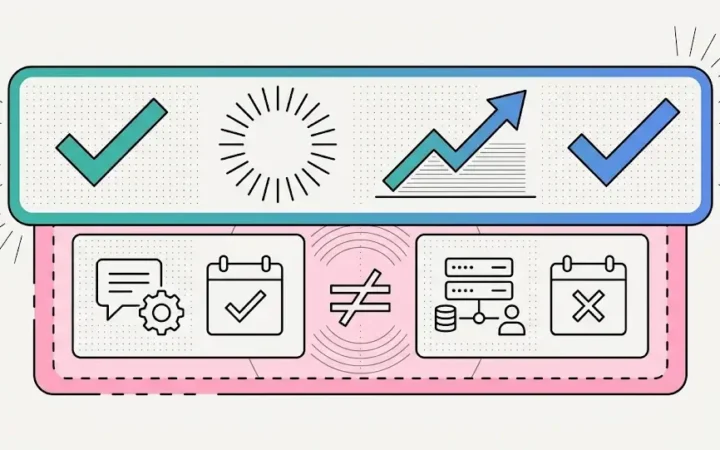
It’s easy for a vendor to say their dental AI was “tested.” It’s much harder to say exactly what that means — tested against which calls, judged by what standard, verified how? Most of the time, “tested” means the vendor ran it a few times and liked what they heard. If you want to understand how dental AI receptionist testing actually works — the kind that produces evidence rather than reassurance — here is exactly what it involves.
Three steps that replace impressions with evidence
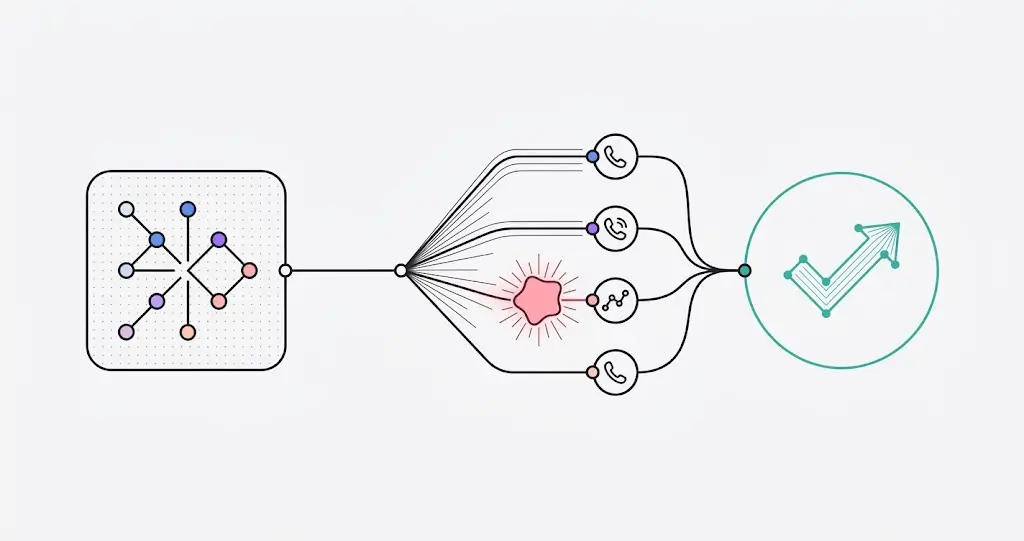
Real dental AI receptionist testing runs in three stages: build an evaluation pack, run realistic calls, and get a readiness verdict. The goal across all three is the same — replace impressions with evidence you can act on.
Step one: build an evaluation pack
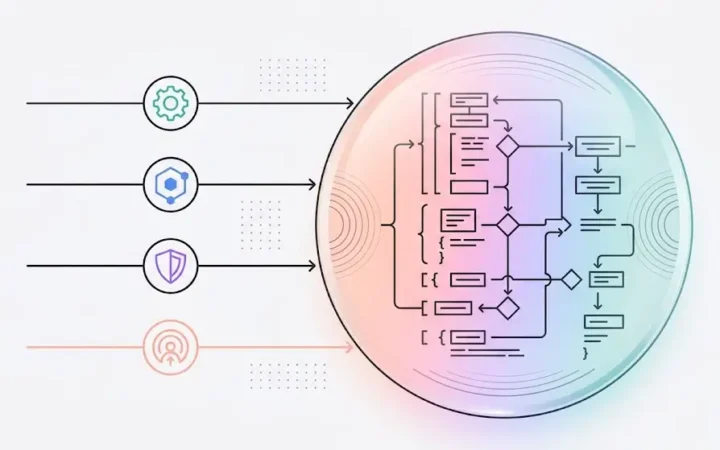
An evaluation pack is a set of scenarios, personas, and your own practice rules. You can start from a prebuilt pack — Patient Safety, Revenue Leakage, or Operational — or build a custom pack around your specific locations, escalation rules, and the calls you most need to get right. For a group, that means encoding your real multi-location routing and your real handoff policies, not a generic script.
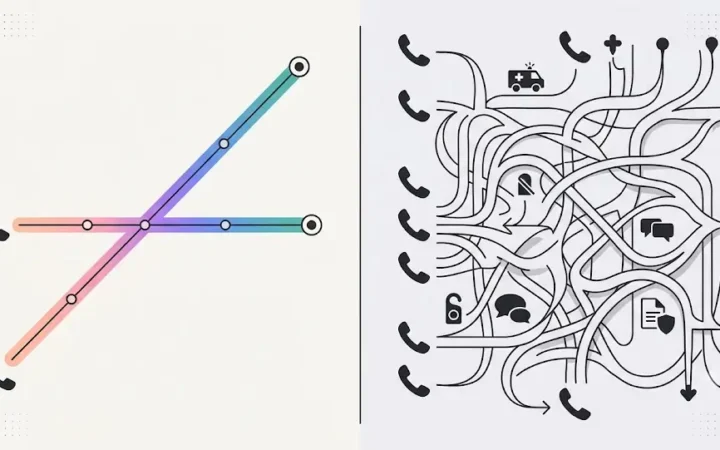
The personas are where the realism lives. Instead of a cooperative caller reading from a happy path, the pack draws on a library of calibrated behaviors: the anxious patient, the elderly caller who needs patience, the adversarial caller who interrupts and pressures. Each persona is defined explicitly — how intense they are, whether they talk over the system, what they open with.
Step two: run realistic calls
The platform places actual calls to your AI receptionist’s phone number. No integration, no SDK, no code on your side — if it has a number, it can be called, and it works with any vendor. The calls aren’t softballs. They include the trap moments the persona library is designed around: the emergency that surfaces on turn three, the insurance change dropped mid-sentence, the request for medical advice the system should decline.
This is the deliberate inverse of a demo. A demo selects the calls that flatter the system. Proper testing selects the calls that stress it.
Step three: get a readiness verdict
The output isn’t a single number floating free of context. It’s a readiness report: an executive summary with a one-line verdict, a list of critical failures (each anchored to a transcript), workflow gaps, patient-experience risks, and — where you’ve granted optional read-only access — verification of whether the system’s claimed actions actually landed in your practice management system.
That last piece matters more than it sounds. An AI receptionist can report that it booked an appointment. Testing can check whether the appointment exists. The gap between those two is exactly where silent revenue loss hides.
What dental AI receptionist testing actually measures
Underneath the report is the scoring logic — the part that turns a call into a pass, a risk flag, or a critical failure. It evaluates the failure modes that carry real consequences:
- Emergency triage — recognizing a genuine emergency and escalating instead of booking a routine slot.
- HIPAA and protected information — handling PHI without collecting or repeating it inappropriately.
- Medical-advice boundaries — declining to diagnose or recommend treatment.
- PMS booking verification — confirming the appointment was actually created.
- Escalation rules — handing off to a human at the right moment.
- Multi-location routing — sending patients to the correct office and provider.
- Cancellation saves and lead capture — attempting to save the booking before the caller hangs up.
- Adversarial pressure — holding up when a caller is rude, manipulative, or probing for unsafe information.
Why you can read the scoring logic yourself
Here’s what separates real testing from a vendor benchmark: the scoring logic isn’t a black box. With RingScore, the rubrics, prompts, and weights that decide what counts as a critical failure are open source — published as the evaluation engine (its “judge” module) on GitHub. So is the persona library, so you can see precisely how each simulated caller behaves. So is the scenario library, with every trap moment and failure flag.
That means three things. You can audit it: if you think a scoring decision is wrong, you can see the logic and challenge it. You can improve it: the scenarios and personas are open to contribution. And you can trust it: scoring logic that’s public can’t quietly favor the vendor who wrote it — which matters, because ELVA, the company behind RingScore, is tested by the same logic as everyone else.
Why “tested” should be a high bar
The reason to make all of this explicit is that the word “tested” is doing a lot of unearned work in dental AI sales right now. A system run through a handful of friendly calls and a system put through public, adversarial, PMS-verified testing are both described as “tested.” They are not the same. The whole point is to make the difference legible — to anyone, in public, on the calls that actually decide whether an AI can be trusted with patients.
If you want to see how your current system, or one you’re considering, holds up against the calls a demo would never show you, you can run it through the same standard everyone else is measured by. For multi-location groups, it’s worth doing this alongside a look at how ELVA approaches DSOs and group practices, since the cost of an untested system multiplies with every location.
Frequently Asked Questions
How does dental AI receptionist testing work?
In three steps: you build an evaluation pack (scenarios, personas, your practice rules), the platform places realistic calls to your AI’s phone number including emergencies and adversarial callers, and it returns a readiness verdict with transcript-anchored failures and optional verification of whether actions actually happened in your PMS.
What does dental AI receptionist testing actually measure?
Eight dimensions: emergency triage, HIPAA/PHI handling, medical-advice boundaries, PMS booking verification, escalation rules, multi-location routing, cancellation saves and lead capture, and adversarial pressure.
What part of the testing is open source?
The evaluation engine: the scoring logic (rubrics, prompts, weights), the persona library (how each caller behaves), and the scenario library (test setups and failure flags). All are public on GitHub for audit and contribution.
Does testing require integrating with my systems?
No. The platform calls your AI receptionist’s phone number directly, so there’s nothing to install, and it works with any vendor. Optional read-only PMS access adds verification of whether claimed bookings and updates actually occurred.
How is a readiness verdict different from an accuracy score?
An accuracy score is a single number. A readiness verdict is a defensible report — executive summary, transcript-anchored critical failures, workflow gaps, patient-experience risks, and verified PMS actions — that your operations team can act on and your vendor can’t dismiss.
See how testing actually works. Inspect the open-source evaluation engine on GitHub, or request access to build an evaluation pack at ringscore.ai.