Most of what gets sold as “AI for dentistry” is a general-purpose language model with a dental prompt attached. It sounds knowledgeable, demos well, and falls apart the moment it has to know something true about your practice. Understanding what AI for dentistry actually requires — at the architecture level, not the marketing level — is the difference between a tool that sounds smart and one you can run a practice on. The short version: it’s an architecture problem, not a model problem.
Dentistry is one of the most demanding environments you can build AI for: highly regulated, dense with rules, rich with data, and — paradoxically — run almost entirely on knowledge that lives in people’s heads and was never written down. A language model with a prompt doesn’t meet that environment. A system engineered for it does. ELVA calls that system the Practice Brain, and this is its architecture, written for people who want to know what’s actually under the hood.
Why “AI for dentistry” is an architecture problem, not a model problem
A general-purpose language model is fluent, but it is ungrounded. It can discuss dentistry in the abstract; it cannot tell you what your practice produced yesterday, what this patient is allergic to, or how your payer adjudicates a specific code. Worse, when it doesn’t know, it doesn’t stop — it generates a plausible-sounding answer. In casual use that’s a quirk. In a dental practice it’s a liability, because a confident wrong answer is more dangerous than an obvious error: you’ll act on it.
And dentistry is the wrong place to guess. It’s governed by explicit rules — CDT coding, payer policy, state and federal regulation, frequency limitations, documentation requirements, clinical guardrails. The answer to most operational questions isn’t a matter of opinion to be improvised. It’s determined. So the real engineering requirement isn’t “a smarter chatbot.” It’s an AI grounded in a specific practice’s real data and bound by real rules — one that applies what’s known rather than inventing what sounds right. That requirement is why ELVA isn’t built on a pure language model.
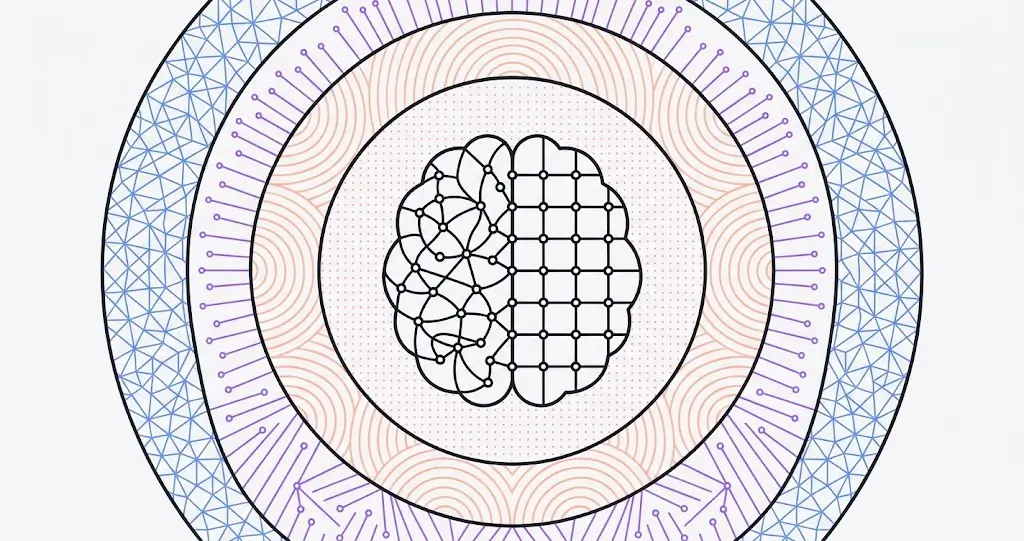
Under the hood — neural-symbolic. The Brain combines two kinds of intelligence. The neural half — deep learning — recognizes patterns and understands natural language, which is what makes ELVA flexible and conversational. The symbolic half — rule-based reasoning — applies explicit rules deterministically, which is what makes ELVA accurate and auditable. The neural side proposes; the symbolic side disposes. Pattern-recognition alone is too loose for a regulated industry; rules alone are too rigid for the real world. Together they give you flexibility and correctness.
One system, one shared memory
The Practice Brain is the intelligent core of the practice — the layer that connects the systems a practice runs on (the PMS, the phones, the clearinghouse, the schedule) and unifies them with the knowledge of how that specific practice operates.
It isn’t a single model. It’s a multi-agent system: specialized agents — one for billing, one for scheduling, one for patient communication — that each handle their domain but share one memory. The scheduling agent knows what the billing agent knows. When reception books a patient, the revenue-cycle side already knows, without anyone re-entering anything. This shared context is what separates a system from a pile of disconnected point tools that each know only their own corner. Everything ELVA does — reception, recall, claims, scheduling, chat — is an organ of this one Brain.
The four layers of the Practice Brain
Layer 1 — Practice DNA: what it knows
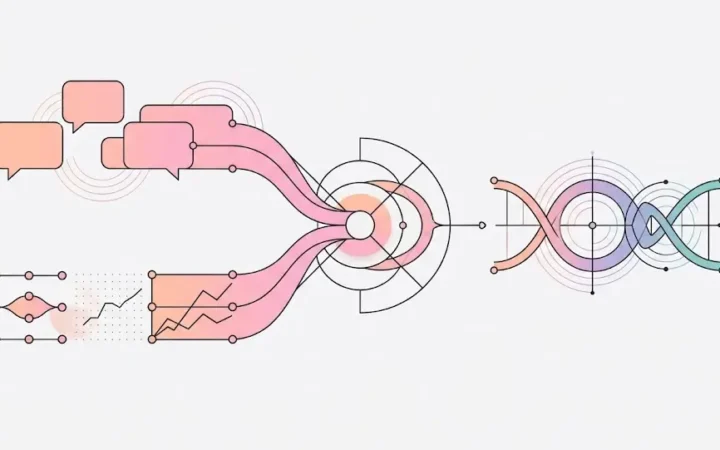
The Brain’s knowledge isn’t generic dental knowledge. It’s the specific operating reality of one practice: how it runs, what its policies are, and how its payers actually behave. That knowledge is built from two fundamentally different kinds of evidence — what the people say (captured through an AI-led interview) and what the data shows (extracted from the practice’s own systems) — and then reconciled against each other. It’s the most distinctive part of how ELVA works, and it has its own dedicated piece on how ELVA learns your practice.
Under the hood — stated vs. observed. The two evidence types are kept separate on purpose: stated knowledge is authoritative but can be aspirational or out of date; observed knowledge is current and real but needs volume to interpret. Each covers the other’s blind spot, and where they disagree, that disagreement is itself a high-value signal.
Layer 2 — Three Minds: whose rules apply
Knowledge in a multi-location organization isn’t flat, so the Brain doesn’t treat it as flat. It holds three distinct knowledge bases: Corporate (the group’s standards), Local (each practice’s own way of operating), and Universal (ELVA’s general dental knowledge). The decisive feature: for every kind of decision, you set which mind speaks first. Set Corporate above Local for the things you want standardized across the group — financial policy, compliance rules, brand voice — and the corporate rule wins, every time, at every location. Set Local above Corporate for the things you choose to leave to each practice’s discretion. You’re not forced into a binary of total central control or total local autonomy. You tune it, per decision.
Under the hood — wildcard-aware precedence. Every rule is scoped (organization, location, payer, plan, procedure, and so on). Lookups resolve by precedence: a more specific scope overrides a broader one, and the configured ordering determines which applicable rule governs. Universal knowledge provides the floor; corporate and local rules override it where they exist. This is the same inheritance model ELVA’s insurance engine already runs in production.
Layer 3 — Supervised Autonomy: how it acts
The Brain doesn’t only know. It acts — but never blindly. Because dentistry is so rule-governed, most situations have a determined right answer rather than a judgment call. That’s precisely why ELVA can act autonomously and safely: when a case is clear and rule-bound, the Brain handles it on its own; when a case is genuinely ambiguous, it routes to a person. This is Supervised Autonomy — autonomy earned by the rules, with a human in the loop for the rest. ELVA already handles the routine, rule-clear majority of the work, and that share keeps climbing toward full autopilot as the AI matures. The under-appreciated half is the escalation: knowing which cases to hand to a human is itself a core function, not a shortfall.
Under the hood — escalation as a feature. The same principle that governs ELVA’s answers governs its actions: no answer is better than a wrong answer. When confidence is low, data is incomplete, or a case falls outside what’s rule-determined, the Brain doesn’t improvise — it escalates. The autonomous share is high because the domain is rule-dense, not because the AI is guessing aggressively.
Layer 4 — Total Context: how it stays coherent
The final layer holds the other three together: a single, shared context across every agent and every interaction. Because all of ELVA’s agents draw on one Brain, the practice’s knowledge, rules, and live data are consistent everywhere — the answer you get in chat, the decision the billing agent makes, and the rule the reception agent follows are all drawn from the same source of truth. There’s no version of the knowledge that one agent has and another doesn’t.
Why this is hard — and why it matters that it’s real
There isn’t another system quite like this in dentistry — not as a competitive boast, but as a plain fact about a hard problem. The difficulty was never building something that sounds knowledgeable about dentistry; a language model with a dental prompt does that in an afternoon. The difficulty is connecting an AI to a specific practice’s real data, binding it with real rules, governing those rules across locations, keeping the whole thing auditable, and never letting it assert something it shouldn’t.
The proof that it’s real, rather than a diagram, is that ELVA already runs this exact architecture in one domain today: the insurance engine acquires coverage knowledge from both observed claim behavior and stated payer policy, reconciles them, scopes them by precedence, and gates them before they go live. The Practice Brain is that proven pattern, generalized across the whole practice.
Private, governed, auditable
Three properties are non-negotiable, because a system that holds a practice’s knowledge has to earn the right to. Your Brain is private — ELVA doesn’t learn one practice’s knowledge into another’s, and patient data isn’t used to train public models. It’s governed by you — the knowledge that drives it is confirmed by the practice, not assumed by the AI. And it’s auditable — actions are recorded, so what the Brain did, and why, can always be traced.
The bottom line
The Practice Brain isn’t a chatbot and isn’t a dashboard. It’s an engineered system — neural-symbolic, multi-agent, rule-governed, human-supervised — designed for the realities of a regulated, knowledge-dependent industry. Four layers: what it knows (Practice DNA), whose rules apply (Three Minds), how it acts (Supervised Autonomy), and how it stays coherent (Total Context). That architecture is what “AI for dentistry” actually requires — and a Brain is only as good as what it knows about your practice, which is how ELVA learns your practice, the subject of the companion piece. You can also see the whole system in product form in ELVA’s AI Brain.
Frequently Asked Questions
What does “AI for dentistry” actually require?
An architecture, not just a model. A general-purpose language model is fluent but ungrounded — it can’t reliably know your practice’s real data or apply your payers’ real rules, and it guesses when it doesn’t know. AI for dentistry requires a system grounded in a specific practice’s data and bound by explicit rules, which is why ELVA built the neural-symbolic Practice Brain rather than wrapping a chatbot.
What is a neural-symbolic AI?
It combines two kinds of intelligence: a neural half (deep learning) that understands natural language and recognizes patterns, and a symbolic half (rule-based reasoning) that applies explicit rules deterministically. The neural side proposes; the symbolic side disposes. This makes the system both conversational and accurate — flexible enough for the real world and correct enough for a regulated industry.
What are the four layers of the Practice Brain?
Practice DNA (what it knows — the practice’s real operating reality), Three Minds (whose rules apply — Corporate, Local, Universal, with configurable precedence), Supervised Autonomy (how it acts — handling rule-clear cases and escalating judgment calls), and Total Context (how it stays coherent — one shared memory across every agent).
How is this different from ChatGPT with a dental prompt?
A prompted chatbot generates plausible-sounding language but isn’t grounded in your practice’s data or bound by your rules, and it invents answers when uncertain. The Practice Brain retrieves from your real systems, applies explicit scoped rules deterministically, escalates when unsure, and keeps an auditable record — properties a prompt can’t provide.
Is the Practice Brain already real or just a concept?
It’s real and running. ELVA already operates this exact architecture in its insurance engine today — acquiring knowledge from observed claim behavior and stated payer policy, reconciling them, scoping by precedence, and gating rules before they go live. The Practice Brain generalizes that proven pattern across the whole practice.
See the architecture in product form. Explore ELVA’s AI Brain, or read the companion piece on how ELVA learns your specific practice.