Here’s a problem every multi-location operator knows and almost no software addresses: the most valuable knowledge in a dental practice isn’t in the PMS. It’s in the head of the person who’s run the front desk for eight years — and the day she leaves, most of it leaves with her. If you want to prevent dental practice knowledge loss when staff turn over, the first step is admitting where that knowledge actually lives, because it isn’t anywhere you can back up.
How this office handles a difficult insurance question. Which patients get a personal call versus a text. What actually counts as an emergency worth squeezing in. How treatment gets presented. When to push back on a cancellation and when to let it go. None of it is written down anywhere. It’s institutional memory, carried entirely by people — and people leave.
For a DSO, this isn’t a risk. It’s a permanent bleed.
For a single practice, losing a key person is a manageable shock you absorb every few years. For a DSO, it’s structural. Front-desk turnover in dentistry routinely runs above 30% a year. Across twenty or fifty locations, that means you’re losing experienced people — and the undocumented knowledge they hold — constantly. Someone, somewhere in your group, is always walking out the door with operating knowledge you can’t recover, and someone new is always starting from near-zero to rebuild it.
The cost shows up twice. Once when the knowledge is lost, and again in the months of ramp the replacement needs — shadowing, asking, slowly re-learning what the practice already knew. You pay that onboarding tax on every hire, at every location, forever. It scales linearly with your headcount and your turnover, and it’s almost completely invisible on a P&L.
The fix is to stop storing institutional knowledge in people
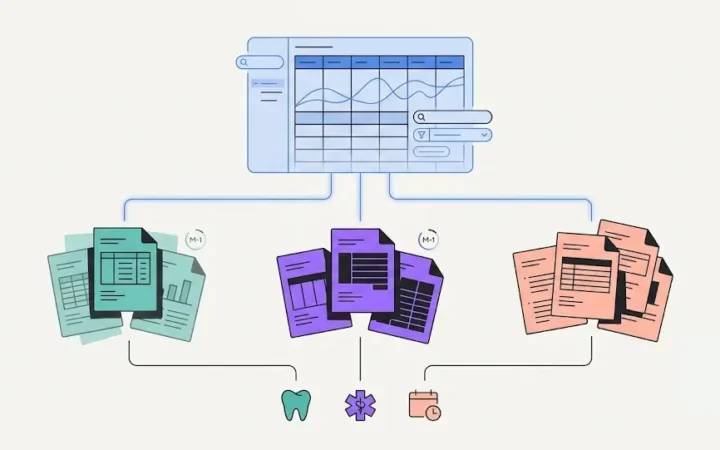
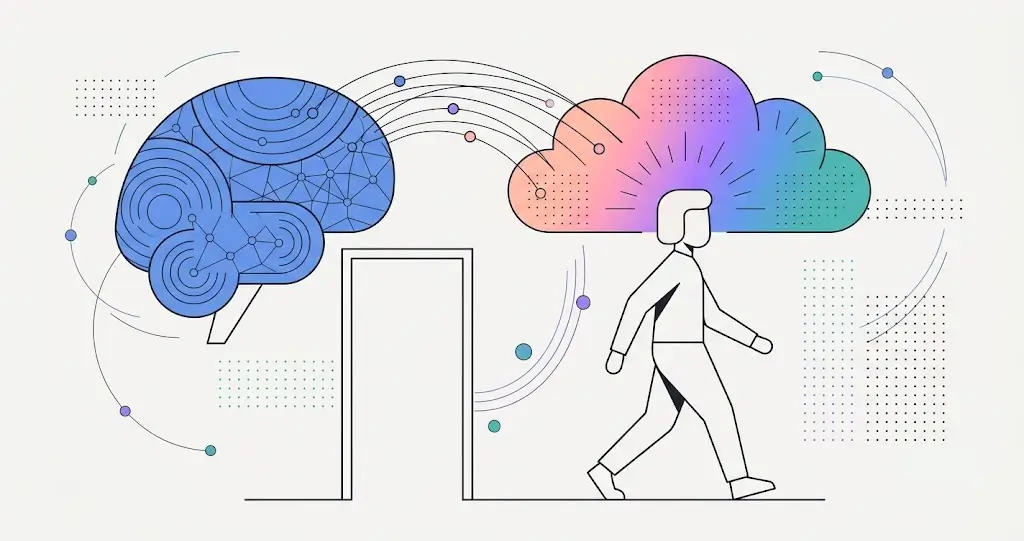
This is precisely the problem ELVA’s knowledge engine is built to solve, and the mechanism is what makes it real rather than aspirational. ELVA extracts a practice’s operating knowledge out of people’s heads and into the Brain — as structured, persistent, queryable knowledge called the practice’s Practice DNA. It does this through an AI-led interview with the people who actually run the practice: open, conversational questions, answered in their own words, with the structure extracted afterward. The output is twofold — the Brain itself, which can now answer questions and act according to how this practice works, and a Clinic Playbook: the practice’s operating knowledge, written down, in most cases for the first time in its history.
Under the hood. The interview routes questions by role (the office manager is asked different things than the lead assistant), generates follow-ups based on what’s already been said, and detects conflicts when two staff describe the same process differently — consolidating multiple people’s knowledge into one coherent set of rules rather than one person’s partial view. Crucially, nothing the interview captures becomes an operating rule until the owner reviews and confirms it. The full mechanism is in the companion piece on how ELVA learns your practice.
Once that knowledge lives in the Brain, the turnover math changes fundamentally. When your veteran office manager gives notice, the practice doesn’t forget what she knew — because what she knew is no longer stored only in her. It’s in the Brain, and it stays. The Brain doesn’t quit, doesn’t take another job, and doesn’t have a last day.
Why this matters more at scale than at a single practice
For a DSO specifically, this does three things a single-practice owner doesn’t even need.
It turns every acquisition’s knowledge into an asset you keep. When you acquire a practice, its operating knowledge currently arrives in the most fragile possible form — in the heads of staff who may not stay through the transition. Extract it into the Brain during onboarding and it survives regardless of who stays.
It collapses the onboarding tax. A new hire doesn’t need months to learn how the practice works when they can ask the Brain. The ramp goes from “learn everything before you’re useful” to “be useful on day one and learn as you go.” Across a group, that’s a structural reduction in the cost of every hire.
And it makes knowledge transferable between locations in a way human-held knowledge never is. Knowledge in someone’s head can’t be copied. Knowledge in the Brain can be referenced, compared, and — for the things you choose to standardize — applied across the group.
That last point is the bridge to the next problem. Capturing each practice’s knowledge so it survives turnover is the first step. The harder question is what to do once you have all of it: how do you make twenty practices, each with its own captured knowledge, actually run consistently — without flattening the things that make each one work? That’s the variance-and-standardization problem, and it’s where the series goes next.
This is one of seven structural problems every multi-location group hits, and the layer underneath the fix is explained in the architecture of the Practice Brain.
Frequently Asked Questions
How do you prevent knowledge loss when dental staff leave?
Stop storing operating knowledge only in people. ELVA extracts a practice’s know-how — how it handles insurance questions, what counts as an emergency, how treatment is presented — into structured, queryable “Practice DNA” through an AI-led interview, so when a key person leaves, the knowledge stays in the system rather than walking out with them.
Why is staff turnover a bigger problem for a DSO than a single practice?
Front-desk turnover in dentistry routinely exceeds 30% a year. A single practice absorbs that every few years; across twenty or fifty locations you’re losing experienced people and undocumented knowledge constantly, and paying months of ramp to rebuild it with every hire — a permanent, linear cost.
What is a Clinic Playbook?
It’s the artifact ELVA produces during onboarding: the practice’s operating knowledge written down — in most cases for the first time. Alongside the Brain that can act on it, the practice gets a documented playbook of how it actually runs, which it keeps.
Does captured knowledge become rules automatically?
No. The AI-led interview proposes rules, but nothing becomes an operating rule until the owner reviews and confirms it. The system also detects and resolves conflicts when two staff describe the same process differently.
How does this reduce onboarding time for new hires?
A new hire can ask the Brain how the practice does something instead of spending months learning it by shadowing. The ramp shifts from “learn everything before you’re useful” to “be useful on day one and learn as you go,” reducing the onboarding cost at every location.
Stop losing what your team knows. See how ELVA captures your practice’s knowledge in how ELVA learns your practice, or explore ELVA’s AI Brain.