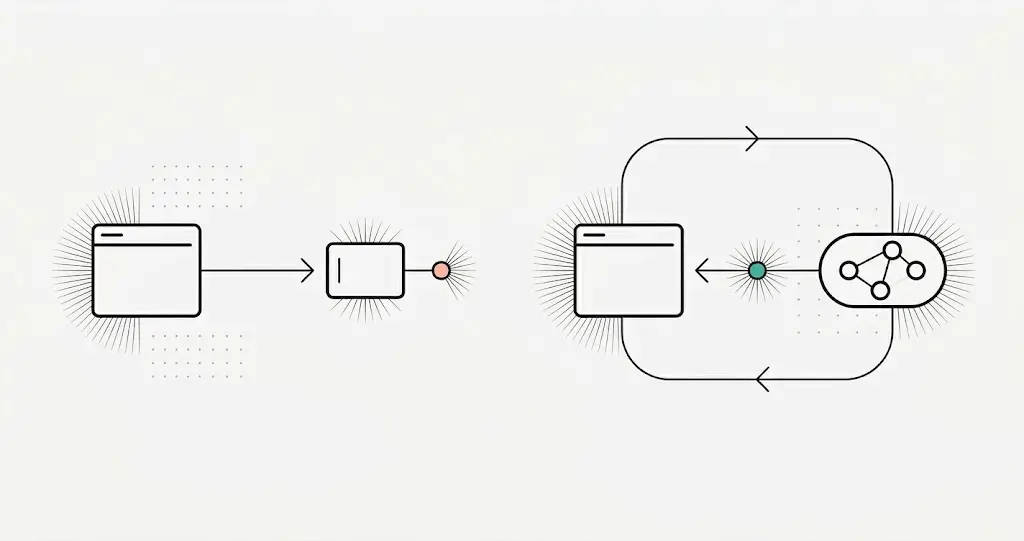
A great many “AI” products in dentistry share a quiet limitation: they can see your data, but they can’t touch it. This is the read-only dental AI problem. The system reads the schedule, analyzes the ledger, surfaces an insight on a dashboard — and then stops. The actual work, the part where something changes in the system of record, still falls to a human who has to read the insight, switch tabs, and key it in. The AI noticed. A person still did.
This is where most dental AI quietly dies: in the gap between knowing and doing. A read-only dental AI generates recommendations no one has time to execute, and within a few weeks the dashboard becomes another tab nobody opens. The promise was automation. The delivery was a very smart report.
Why read-only dental AI is a comfortable place for vendors to stop
It’s worth understanding why so many products stop at read-only, because the reason is revealing. Reading data is relatively easy and relatively safe. Writing data back into a practice management system is hard and consequential — it means integrating deeply enough to create an appointment, update a chart, or submit a claim, and being trusted to do it correctly. Plenty of vendors avoid that difficulty by staying on the safe side of the glass: they’ll tell you what to do, but they won’t do it.
The trouble is that the value was always in the doing. An insight that “this slot could be filled” is worth nothing until the slot is filled. A flag that “this claim is missing an attachment” is worth nothing until the attachment is added and the claim goes out clean. Read-only dental AI offloads the analysis and leaves you the labor — which is backwards, because the analysis was never the bottleneck. The labor was.
What bi-directional write-back actually means
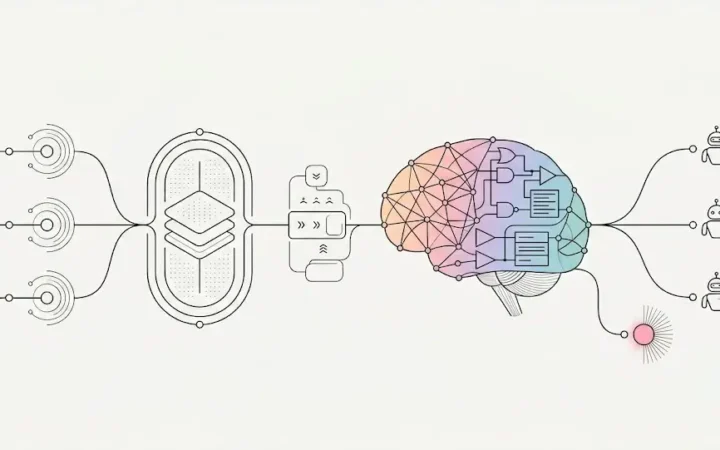
Write-back is the difference between an AI that observes your practice and an AI that operates it. Concretely, a system with genuine write-back doesn’t just notice an opening in the schedule — it reaches out, books the patient, and writes the appointment directly into the PMS. It doesn’t just flag an overdue balance — it acts on it and records the result. It doesn’t just identify a denied claim — it drafts and submits the appeal. The loop closes inside the system of record, without a human as the manual relay between insight and action. That’s only possible when the AI sits on a shared intelligence rather than bolted to the side of one — which is exactly what ELVA’s AI Brain is: the central, integrated intelligence that’s allowed to write, not just read. A read-only dashboard is a tool watching through glass; a brain is the operating system the practice actually runs on.
That closed loop is the whole game. It’s the difference between a system that adds to your team’s to-do list and one that removes from it — the exact thing read-only products were avoiding.
The questions a technical buyer should ask
If you’re the person responsible for the technology decision, the read-only trap is easy to fall into because read-only demos beautifully. The dashboard looks impressive; the insights are real. The limitation only shows up months later when nothing has actually been automated. So ask, before you buy:
- Does it write back to the PMS, or only read from it? Get specific: can it create an appointment, update a chart, submit a claim — and to which systems?
- When it acts, how do I verify the action actually completed? A claim the AI “submitted” needs to be a claim that’s actually in the queue. Closing the loop includes confirming the loop closed.
- What happens to my data to make this work? Deep integration raises the stakes on data handling. Is your data isolated, or pooled? Is it ever used to train models for other organizations?
That last question matters more as the integration gets deeper. A system trusted to write into your records is a system with significant access, and the governance around that access is part of the buying decision — not an afterthought.
Sovereign data is the other half of the requirement
The flip side of demanding write-back is demanding control over what that access means for your data. The right architecture pairs deep, bi-directional integration with strict data isolation: your data lives in a private silo, never shared with or used to train models serving other dental organizations, with role-based access and a complete, immutable audit log of every action and data event. You get an AI that can act inside your systems and clear limits on what it can do with what it sees — which is exactly the standard a multi-location group should hold any vendor to.
For an enterprise group, those two requirements belong together. Write-back without data sovereignty is power without governance. Data sovereignty without write-back is governance without power. The system worth buying has both: it can actually do the work, and it does it inside walls you control. That pairing is the core of how ELVA differs from a thin layer over someone else’s model.
Stop buying dashboards. Buy the action.
The test for any dental AI is simple to state and hard for read-only products to pass: after the insight, who does the work? If the answer is “your staff, by hand,” you’ve bought a report with a subscription. If the answer is “the system, written back into your records, verifiable, inside your own data walls,” you’ve bought automation. The dashboard was never the point. The action was.
Frequently Asked Questions
What is read-only dental AI, and why is it a problem?
Read-only dental AI can see your data and generate insights but can’t write changes back into your practice management system. The value is in doing, not just knowing — so a read-only system leaves the actual labor to your staff, and within weeks the dashboard becomes a tab nobody opens.
What is bi-directional write-back?
It’s the ability of an AI to read from your PMS and write back into it — creating appointments, updating charts, submitting claims — so the loop from insight to action closes inside the system of record without a human relaying it manually.
What should a technical buyer ask about integration?
Whether the system writes back to the PMS or only reads; which actions it can perform and to which systems; how completed actions are verified; and what happens to the practice’s data — whether it’s isolated or pooled, and whether it’s used to train other organizations’ models.
Why does data sovereignty matter with deep integration?
Because a system trusted to write into your records has significant access. Pairing write-back with strict data isolation — a private data silo, no use of your data to train other organizations’ models, role-based access, and a full audit log — lets the AI act without compromising control over your data.
How do I know an AI actually performed an action it claims to have done?
Verification has to be part of the design. A claim the AI “submitted” should be confirmable in the queue; an appointment it “booked” should be present in the PMS. Closing the loop includes confirming the loop actually closed, not trusting the system’s own report.
See an AI built to act, not just observe. Explore ELVA’s architecture for multi-location groups, including data isolation and PMS write-back, in ELVA for multi-location groups.